Why sail Belize
Belize hangs off the eastern edge of Central America with a barrier reef running most of its length — the second-longest in the world after Australia's. Behind the reef the water is flat, shallow, and lit up turquoise; outside it the swell rolls in off the open Caribbean. Between the two sits a scatter of low sand-and-mangrove cayes, and further out, three of the four atolls in the western hemisphere. You sail line-of-sight most days, hop between cayes an hour or two apart, and drop the hook over sand in 3–5m of water clear enough to count the links in your chain.
It suits people who want reef and wildlife over nightlife. Snorkelling and diving are the reason to come — the reef is close, healthy in patches, and you can be off the boat and over coral within minutes of anchoring. English is the official language, which removes a layer of friction, and the cruising is genuinely relaxed. It is not a place for miles of hard windward beating; it is a place for short passages, long swims, and quiet anchorages.
Sailing areas and harbours
Most charters run out of the north, around Ambergris Caye and San Pedro, or from Placencia on the southern coast. Placencia is the more common base for the cruising grounds south of the reef — a narrow peninsula town with a working harbour and easy provisioning. From there the classic ground is the run out to the cayes: the Pelican Cayes, Ranguana, Silk Cayes, and the mangrove maze of the southern lagoon.
The reef itself sits a few miles offshore and defines the sailing. Inside it, you navigate by eye — reading water colour for depth, which takes a day to get used to and is second nature by day three. Turneffe Atoll and Lighthouse Reef, home to the Great Blue Hole, lie further out and need settled weather and a longer hop across open water. Harbours are basic. Expect anchoring over marinas; there are few full-service marinas by Mediterranean standards, so you provision at the base and stay largely self-sufficient after that.
Season and winds
The sailing season runs roughly November to May, the dry season. Trade winds blow from the east and north-east, typically 10–20 knots, steadier and stronger December through March. This is the reliable window — clearer water, fewer bugs, consistent breeze. It is also the busiest and priciest stretch, especially around Christmas and Easter.
June to November is the wet season and overlaps the Atlantic hurricane season. Rain is heavier, the water less clear, and the risk of a named storm rises through late summer. Some charters still run in the shoulder months, but plan around weather and expect changeable conditions. For a first Belize charter, aim for December to April: it gives you the trade winds, the visibility, and the settled spells you need to reach the outer atolls.
Charter types
We run bareboat, skippered, and crewed charters here. Bareboat is realistic if you have coastal experience and are comfortable with eyeball navigation over reef — the shallow, reef-strewn grounds reward caution, and charter companies will want to see a sailing CV. If you are new to reef sailing or want to dive hard without also running the boat, take a skipper who knows the cuts through the reef and the good anchorages.
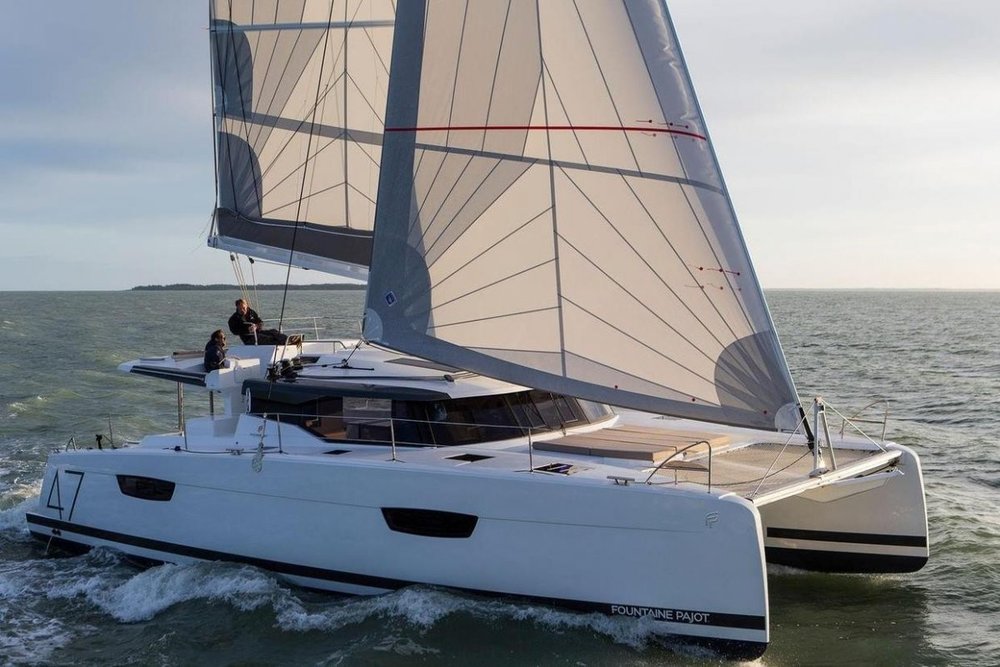
Monohulls and catamarans both work. Catamarans dominate the fleet here for good reason: shallow draft matters over these banks, and the deck space suits a group that will spend most of the day swimming and diving. Cabin charters, where you book a berth rather than the whole boat, come up too. Tell us what you are after on WhatsApp and we will match the boat to the plan.
Costs
A week's charter varies with boat size, season, and whether you take crew. High season — Christmas through Easter — carries the top rates; the shoulder months are softer. As a rough guide, a bareboat catamaran for a week runs in the low-to-mid thousands of EUR, more for larger or newer boats and more again with a skipper and cook.
On top of the base fee, budget for fuel, a provisioning shop at the base, park and marine-reserve fees, and mooring where charged. Diving is usually paid separately unless you have brought your own kit and certification. National park fees for the outer atolls and the Blue Hole add up if you plan to visit them. For a firm number on a specific boat and week, message us on WhatsApp — Price on request is the honest answer until we know your dates and party.
A sample week
Day 1 — Board at Placencia, provision, and shake down with a short hop to a nearby caye. Swim, check the systems, sleep at anchor.
Day 2 — Sail out to the Silk Cayes marine reserve. Snorkel the reef; you can drift over rays and the odd nurse shark here. Anchor off a sand caye for the night.
Day 3 — North to the Pelican Cayes, a cluster of mangrove islets with sheltered anchorages and good macro snorkelling. Quiet, few other boats.
Day 4 — Ranguana or Hatchet Caye for a beach day. Short sail, long swim, sundowners on the sand.
Day 5 — Weather permitting, make the longer hop toward Turneffe Atoll for a change of scene and different reef. This day needs settled conditions; keep it flexible.
Day 6 — Work back inside the reef, stopping at a caye you liked or one you skipped. Fishing en route if that is your thing.
Day 7 — Easy sail back toward Placencia, anchor close to base, and clean up. Fly out day 8.
Adjust freely — the beauty of these grounds is the short distances, so you can trade a passage day for another swim without wrecking the plan.
Getting there and practicalities
Most charterers fly into Belize City (Philip S. W. Goldson International). From there, a short domestic flight or a road-and-boat transfer gets you to Placencia or San Pedro; the domestic hop is quick and worth it for the reef view. Belize uses the Belize dollar, pegged to the US dollar, and US dollars are widely accepted. English is the official language.
Clear-in paperwork is handled at the base for most charters. Bring your passport, sailing CV or certifications for a bareboat, and dive cards if you plan to dive. Provisioning is best done at the base town — the outer cayes have little or nothing, so stock up before you leave. Mobile signal fades once you are among the cayes, so download charts and let people know your rough plan before you drop off the grid.
Right for reef lovers, divers, snorkellers, and families who want warm shallow water and short sails. Less right for anyone chasing long passages, big marinas, or a nightlife-heavy week.
Live fleet
Yachts available in Belize.
 Available
Sand Star
Crewed
 Available
Nice Aft Too
Crewed
 Available
Tranquilo
Crewed
 Available
First Tracks
Crewed
 Available
Magnificent
Crewed
 Available
Discover
Crewed
 Available
Nowhere
Crewed
 Available
Ventana Al Mar
Crewed
 Available
Second Wind
Crewed
 Available
The Big Leboatski
Crewed
Belize questions
Asked and answered.
How much does a yacht charter in Belize cost?
When is the best time to sail Belize?
Do I need a licence to charter a yacht in Belize?
Where do most Belize charters start?
Is Belize good for a family sailing holiday?
Can I visit the Great Blue Hole on a charter?
Monohull or catamaran for Belize?
Where can I sail in Belize?
How many yachts are available in Belize?
How do I get a quote?

Real people
Talk to a human
A real person reads every message and replies within 24 hours — no bots, no auto-replies.
- Honest advice from sailors, not salespeople
- We reply within 24 hours
- No spam, ever
Talk to an expert
Get three options.
Real sailors who run the trips — tell us your week, your group and your vibe. Same day, we send three boats, three prices and the honest trade-offs. Boats we would put our own families on.
Final boarding call
Why not you?
New sailors, beginners or seasoned skippers — tell us when, where and how many. We send three real options the same day. No spam, no fluff, no commitment.